
HBOT vs. Regular Oxygen: What the Pressure Actually Changes
People often assume hyperbaric oxygen therapy is just a stronger version of the oxygen you might get through a nasal cannula or a mask. It is a reasonable guess, since both involve oxygen. But the mechanism behind HBOT is different in a way that matters, and understanding that difference helps set realistic expectations before anyone considers whether it might be appropriate for their situation.
What Regular Supplemental Oxygen Does
Standard supplemental oxygen increases the percentage of oxygen a person breathes in, typically delivered at normal atmospheric pressure. It can raise the amount of oxygen in the blood to a degree, which is useful for many respiratory and medical conditions. But there is a practical ceiling to how much oxygen the blood can carry this way, because most of the oxygen your blood transports is bound to hemoglobin in red blood cells, and that binding capacity has a limit.
What Changes Inside a Hyperbaric Chamber
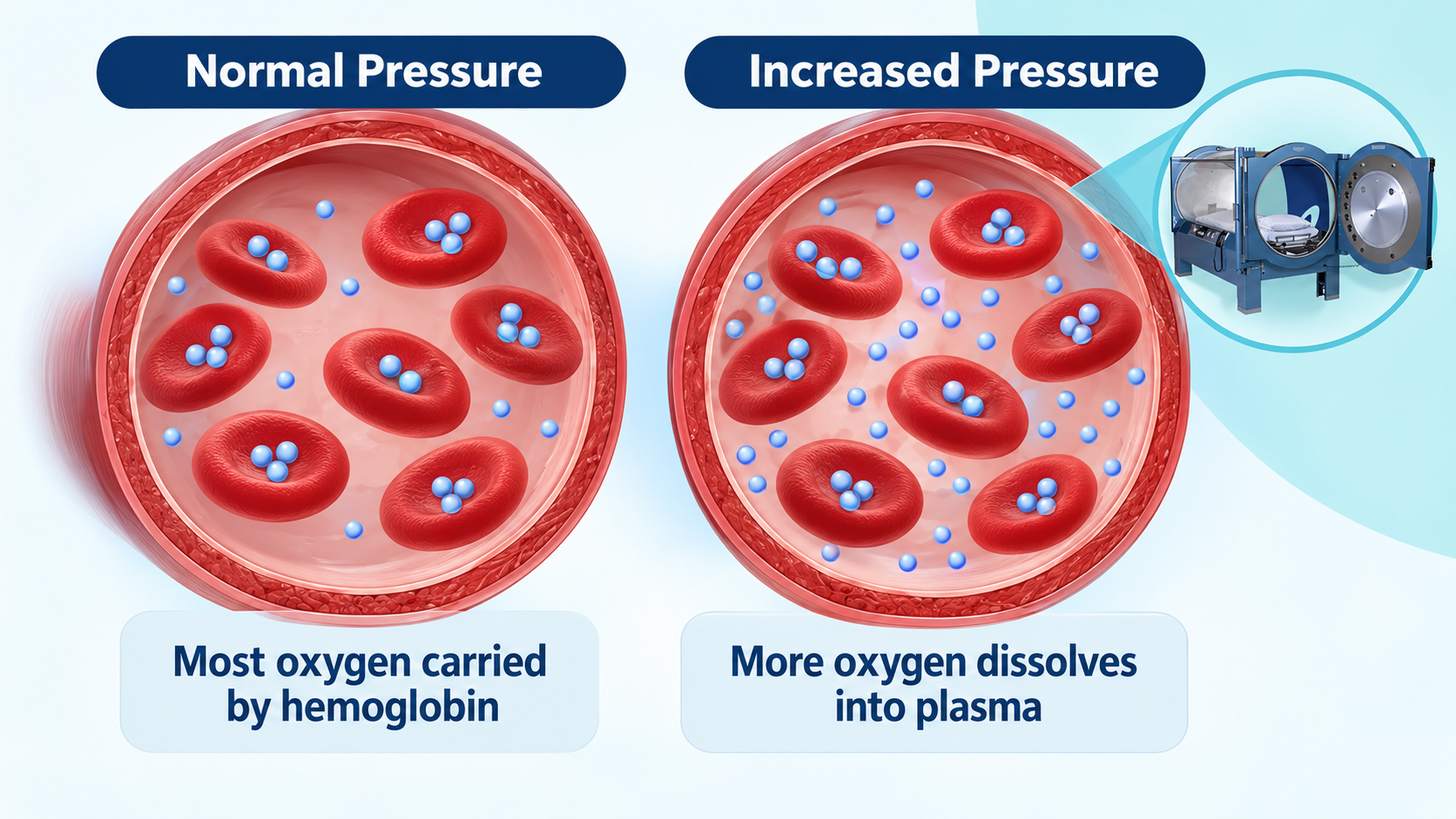
Hyperbaric oxygen therapy involves breathing close to 100 percent oxygen inside a monitored medical chamber that is pressurized above normal atmospheric levels. That combination, oxygen concentration and increased pressure together, is what distinguishes HBOT from supplemental oxygen delivered at normal pressure.
Under increased pressure, more oxygen can dissolve directly into the blood plasma, not just attach to hemoglobin. This allows a higher volume of oxygen to be carried throughout the body, including to tissue that may not be receiving adequate oxygen through normal circulation.
This is a meaningful physiological difference, not just a stronger dose of the same thing. It is also why HBOT takes place in a controlled, monitored clinical environment rather than as something that can be approximated at home or through a wellness product.
Why This Distinction Matters
A lot of the confusion around HBOT comes from treating it like a wellness trend rather than a monitored medical treatment. Oxygen bars, at-home oxygen concentrators, and mild hyperbaric devices marketed for general wellness do not create the same pressurized, medical-grade environment used in clinical HBOT, and they should not be assumed to produce the same effect.
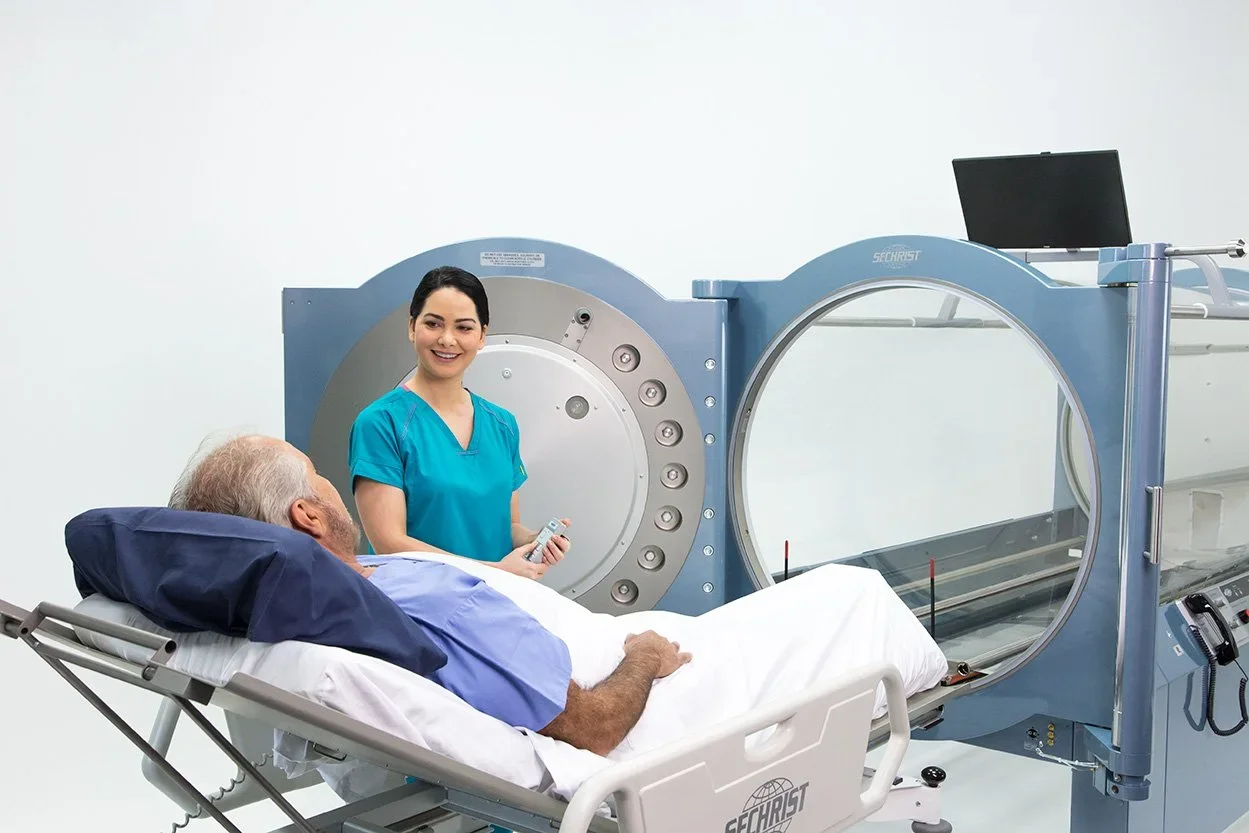
Medical-grade HBOT is delivered under supervision, with attention to health history, appropriate pressure levels, and monitoring throughout treatment. That structure exists because increased pressure and oxygen levels are being introduced to the body in a way that needs to be managed carefully, not casually.
HBOT as Part of a Broader Plan, Not a Standalone Fix
It is also worth being direct about what HBOT is not. It is not a general wellness boost, and it is not a stand-in for other necessary medical care. HBOT may be considered for certain qualifying conditions, often alongside other treatment, such as wound care, rather than in place of it.
For a patient managing a non-healing wound, for example, HBOT does not replace addressing circulation, infection risk, pressure, nutrition, or other factors that affect healing. When it is used, it is typically one part of a broader care plan built around a specific diagnosis and clinical evaluation.
This is a deliberate distinction. Not every wound, and not every patient, is a candidate for HBOT, and that matters. The pressure and oxygen delivery that make HBOT clinically meaningful are also why it requires proper screening before treatment begins.
Where the Conversation Starts
If you are trying to understand whether HBOT might be relevant to your situation, the starting point is not the chamber itself. It is a conversation about your diagnosis, your health history, and what your care team has already tried. That evaluation is what determines whether HBOT may be appropriate, and it is a step that should never be skipped.
Understanding the difference between HBOT and regular supplemental oxygen is a useful first step in that conversation. Pressure changes how oxygen moves through the body in a way that a mask or cannula simply cannot replicate, and that difference is the reason HBOT exists as a distinct, monitored medical treatment rather than an at-home wellness option.
Patients sometimes come in having already tried supplemental oxygen at home without much change in a wound or symptom they were hoping to address. That experience is understandable, and it is also part of why the distinction matters. Supplemental oxygen and hyperbaric oxygen therapy are not interchangeable, and assuming one will behave like the other can lead to disappointment that has nothing to do with whether HBOT itself might have been appropriate.
If you have questions about how HBOT works or whether it may be worth discussing for your situation, contact HyperbaricNC: https://www.hyperbaricnc.com/contact-us
Educational only. Not medical advice.
