
When a Diabetic Wound Won't Heal, Oxygen May Help
Hyperbaric oxygen therapy in North Carolina for diabetic ulcers and slow-healing wounds.
The Real Problem
If you're living with a diabetic wound, you already know how frustrating and serious it can be. What starts as a small sore can quickly become harder to manage.
Often the challenge isn't just the wound itself. Diabetes can reduce circulation, which means the area may not get enough oxygen to heal properly.
How HBOT May Help
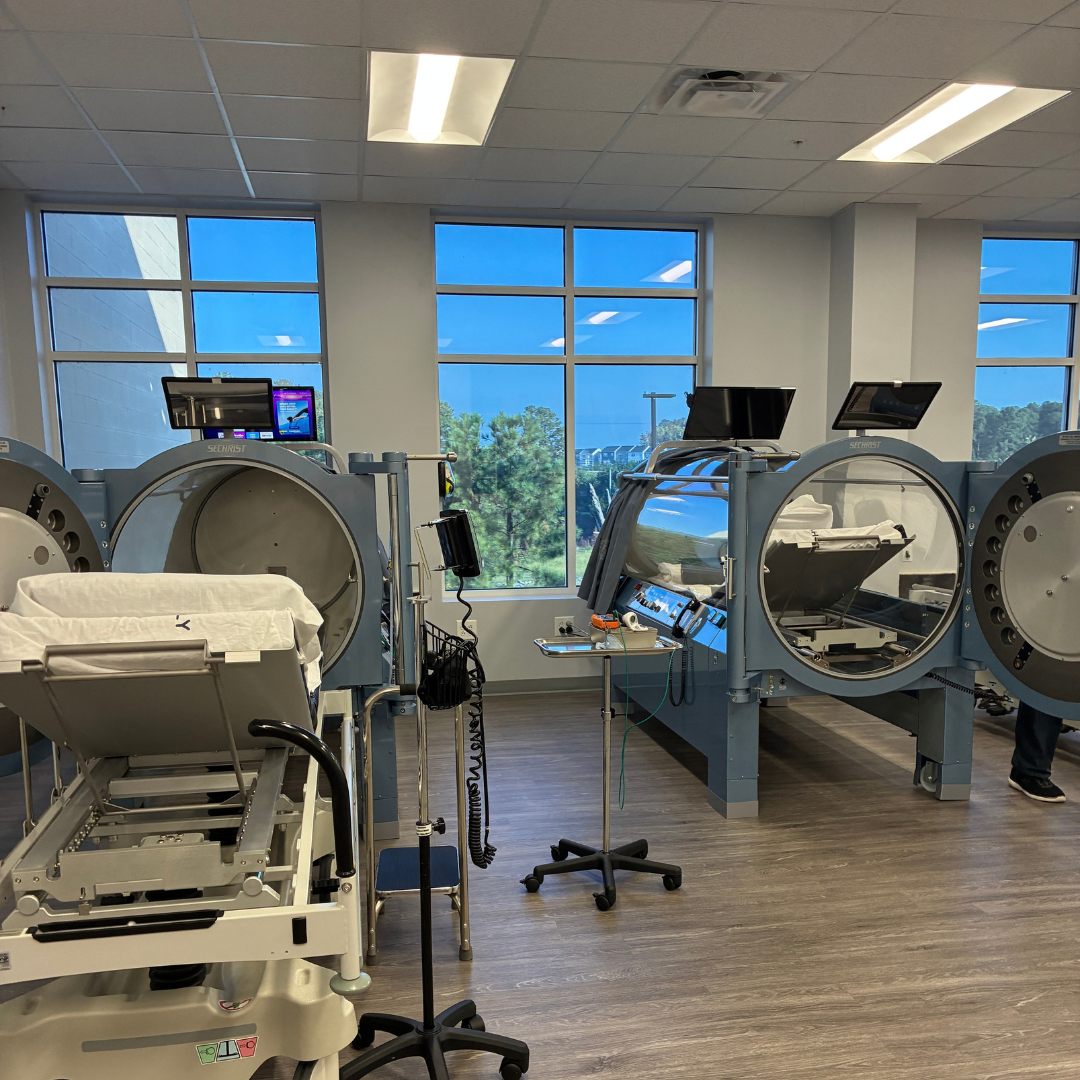
HBOT increases the amount of oxygen your blood can carry, so oxygen can reach damaged tissue more effectively, even where circulation is poor. For certain diabetic wounds, this may help:
Support tissue repair
Promote new blood vessel growth
Help the body fight infection
Diabetic wounds of the lower extremities are one of the FDA-recognized uses of HBOT, and coverage may be available when criteria are met.
Who This May Be For
HBOT may be considered if you have:
A diabetic foot ulcer
A wound that hasn't healed after weeks or months of proper care
Been told healing is slow or at risk
Concerns about the wound getting worse
Why Early Action Matters
A diabetic wound that isn't improving can raise the risk of infection, tissue damage, and more serious complications. If your wound has stalled, it's worth asking what should be evaluated next, sooner rather than later.
If you notice fever, spreading redness, or rapidly increasing pain or swelling, seek urgent medical care.
Straight Talk
HBOT does not replace good wound care or diabetes management. It works best alongside proper medical and wound care, blood sugar control, and consistent treatment. Most plans involve a series of sessions over several weeks. Learn what to expect.
Need wound care too? Our partner clinic, Wound Care NC, can help.

Get a Clear Evaluation
If your wound isn't improving, let's look at your options together.